
Will a Plastic Surgeon Turn You Down If You Have Body Dysmorphic Disorder?
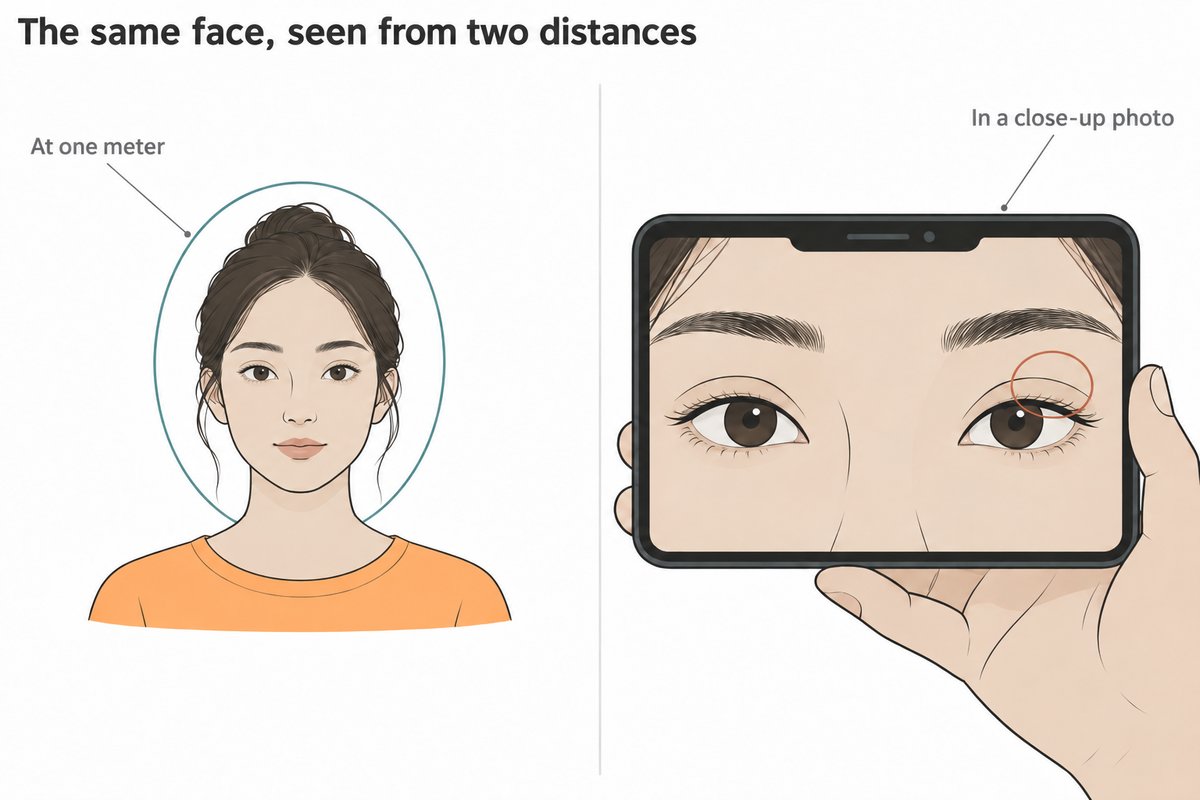
Not for disliking a feature, and not for a label. Most people who dislike one part of their face do not have body dysmorphic disorder (BDD), often called body dysmorphia, and a consultation is not a test of vanity or sanity to pass or fail. What a careful surgeon has to decide is narrower: will this operation take this worry away? When the flaw is visible and the expected change fits its size, surgery can. When the flaw is barely visible and the worry is large, most of the published evidence says surgery rarely relieves it, and the kind answer, the honest one, is no. In practice, that means matching the size of a visible flaw against the size of the worry attached to it.
In a systematic review of BDD across settings, the weighted prevalence in community adults was estimated at 1.9 percent, against an estimated 13.2 percent in general cosmetic surgery and 20.1 percent in rhinoplasty. A United States telephone survey applying the diagnostic criteria to 2,048 adults found a point prevalence of 2.4 percent. That is roughly 2 in 100 adults, against an estimated 1 in 8 people seeking cosmetic surgery and about 1 in 5 in rhinoplasty. Those cosmetic-setting figures are pooled estimates, not counts of confirmed diagnoses.
What Is Body Dysmorphic Disorder, and How Is It Different From Disliking a Feature?
BDD is a preoccupation with a flaw in appearance that other people cannot see, or can only barely see, which leads to repeated behaviors such as mirror checking, causes real distress or gets in the way of work, study or relationships, and is not better explained by an eating disorder. Those four parts are the definition in plain words, as restated in a clinical reference chapter updated in 2024. Insight sits on a spectrum, from knowing the view is probably exaggerated to being entirely convinced. The World Health Organization places the condition in the obsessive-compulsive and related disorders group of ICD-11, code 6B21.
Notice what is missing from that definition: how strongly you dislike the feature. Disliking a feature is ordinary; in an opt-in survey of 1,893 American adults, body dissatisfaction ranged from 13.4 to 31.8 percent among women and 9.0 to 28.4 percent among men, depending on the measure. That is somewhere between 1 in 10 and 1 in 3 adults, against about 2 in 100 for BDD.
Four other things draw the line: whether someone else can see the flaw, how much of the day it takes, how much it hurts, and what it makes you give up. In the same telephone survey, among the adults who met the criteria, 90 percent reported significant distress and 51 percent reported impaired functioning. Distress and impairment are built into the definition; a thought about a heavy eyelid before a photo, forgotten afterward, is not.
Ordinary Worry or Something More? At a Glance
Six questions separate an ordinary concern from one that deserves a closer look. None asks how much you dislike the feature; they ask who else can see it and what it takes from your day and your life.
| Question | Usually an ordinary concern | A reason to look more closely |
|---|---|---|
| Can someone else see it at conversation distance? | Yes, and a surgeon can point to it | No, or only in a phone photo held close to the face |
| How much of the day does it take? | An occasional thought at the mirror; under 1 hour a day | Hours, unable to stop; 1 to 3 hours a day or more |
| What does it make you give up? | Nothing; plans go ahead | Avoiding photos, cancelling plans, not wanting to go out |
| How many clinics and earlier procedures? | A first or second consultation | Several clinics already; earlier procedures described as not perfect |
| What do you expect surgery to change? | This one feature | Work, relationships, or how life goes in general |
| Does reassurance help? | Yes; an answer settles it | “Will it be okay?” asked again and again with no relief |
The hour figure in the table is a screening item, not a diagnostic threshold: on the BDDQ, a respondent must indicate that appearance thoughts take 1 to 3 hours or more than 3 hours a day for the screen to count as positive, and a positive screen still needs a follow-up interview in person before anyone calls it a diagnosis. Most readers belong in the “usually an ordinary concern” column.
How Common Is BDD Among People Seeking Cosmetic Surgery?
Pooled estimates put it between about 1 in 10 and 1 in 5, but the answer depends heavily on how the counting was done: three different things are called prevalence, and they differ by a factor of several hundred. Screened positive on a questionnaire gives the high number: at one United States facial plastic clinic, 41.0 percent of 488 patients screened positive on the BDDQ-AS. Diagnosed in a structured interview gives the middle number: 20.0 percent in cosmetic and dermatology settings, in a pooling of 22 interview-based studies. Recorded in a medical chart gives the low number: among 226,374 people who had plastic surgery over 20 years, fewer than 0.1 percent carried a recorded BDD diagnosis, and 52.1 percent of those were diagnosed only after cosmetic surgery.

A positive screen is not a diagnosis, and a chart code is not a prevalence. Between those extremes, pooled estimates land near 1 in 5: 19.2 percent across 48 studies and 14,913 people requesting cosmetic surgery, though the summary does not say how many of those studies used interviews rather than screens, and a separate review found individual plastic surgery studies ranging from 2.21 to 56.67 percent. A range that wide is why this article says roughly 1 in 10 to 1 in 5.

No published Korean study of BDD prevalence in cosmetic surgery patients could be found, and no Korean validation of the cosmetic screening questionnaires. In Taiwan, among 817 cosmetic surgery patients reviewed over three years, 7.7 percent met the diagnostic criteria, 85.7 percent of them identified at the preoperative evaluation, while the nine who were missed all had a poor outcome after surgery. In mainland China, among 531 cosmetic surgery patients, 11.3 percent met the threshold on a BDD severity scale, 13.6 percent during the COVID-19 period against 3.4 percent after it.
Why Doesn’t Cosmetic Surgery Usually Relieve BDD?
Because the operation changes the feature, and in BDD the worry is not stored in the feature. Among 289 people with BDD, 23.2 percent of the adults had received surgery, and appearance treatments of every kind rarely improved their BDD symptoms. A separate sample of 200 people showed the same pattern, with rhinoplasty received more often than any other operation and rarely any improvement.
In 25 people with BDD who had undergone 46 procedures between them, mean satisfaction was 3.5 out of 10, it fell from 3.9 for a first procedure to 2.8 for a repeat, and about half moved their preoccupation to a different part of the body afterward. In a five-year follow-up of people who had sought surgery for a minimal defect, six of the seven with BDD who went ahead still had BDD five years later, despite reporting that they were satisfied with the result. Being pleased with an operation and being free of the worry are different things.
The evidence is not unanimous. In Brazil, 81 percent of 31 women with mild to moderate BDD were in remission one year after rhinoplasty. In a retrospective review of 115 rhinoplasty patients, 83 percent of positive BDDQ-AS screens had turned negative after surgery, yet a positive screen correlated with worse aesthetic satisfaction, and nothing measured beforehand predicted who would improve. In Australia, 91 percent of people who scored in the at-risk range on the COPS questionnaire scored below the cut-off of 40 after surgery, while 3.8 percent of those who started low rose above it. These are small studies, one limited to mild to moderate cases, and two of the three measured a screen score, not a diagnosis.
A 2016 review reconciles them: “the majority of individuals with BDD have poor outcomes after cosmetic interventions; however, based on the current literature, it cannot be fully ruled out that certain individuals with mild BDD and localised appearance concerns may benefit,” and few studies have followed people forward in time. That is what a surgeon has to decide on.
How Does a Plastic Surgeon Screen for Body Dysmorphia in a Consultation?
At my clinic, by conversation rather than a questionnaire: I check whether the flaw is visible at about a meter, watch for signals that add up, and ask five questions. The first signal is a mismatch: a small flaw carrying a large worry. I am not diagnosing anyone; I am deciding whether an operation is likely to help.

The first thing I check: can I see it from a meter away
I ask the patient to point to the flaw, then look for it from where I sit. Almost every patient brings one area that bothers them, and that is normal. When I can see it at ordinary conversation distance, I say so: yes, I see it, and this is how it can be corrected. When I cannot, I start listening differently and move on to questions.
What adds up to a signal
No single sign decides anything. What I watch for is accumulation: dozens of photos of the same area on a phone; several clinics already visited, with earlier procedures described as “not perfect”; the question “will it be okay?” asked again and again, each answer bringing no relief; and the expectation that surgery will fix a job or a relationship. The face treated many times over, a signal in its own right, is described in the overfilled face and whether to dissolve or lift.
Sometimes the signal reaches me before the patient does. At my clinic, the consultation manager is the coordinator who meets the patient before the surgeon, and patients speak more freely with that coordinator than with me. The coordinator sometimes flags a consultation first.
The five questions
Then I step away from the flaw and ask five things: point to what bothers you most, in the mirror. Why now, and did something happen recently? Was this your own idea, or did someone else bring it up? How much of your day does this take up, and have you avoided photos or plans because of it? What do you expect to be different in your life after surgery?
Most patients answer short and specific: one eyelid looks heavier than the other in photos. That concern has a surgical answer. The pattern that worries me is the answer that grows: everything looks wrong; if I fix this, everything will work out.
Why I don’t hand out a questionnaire
I do not use a screening questionnaire. I judge from the conversation above. Validated questionnaires exist and are short. The BDDQ-AS is a seven-item self-report questionnaire that takes one to two minutes in most cases. A nine-item alternative, the COPS, treats a score of 40 or more as a reason for further assessment. Tested against a clinical interview in a facial plastic clinic, the BDDQ showed a sensitivity of 100 percent and a specificity of 90.3 percent.
Rules elsewhere go further. UK guidance asks that “for people with mild disfigurements or blemishes who are seeking a cosmetic or dermatological procedure, healthcare professionals should routinely consider and explore the possibility of BDD.” Since 1 July 2023, Australia has required that the practitioner assessing a patient for cosmetic surgery use a validated psychological screening tool for BDD. I could find no Korean rule or society guidance requiring one. What I have described is my practice at my clinic, not a guideline.
The conversation lines up with the published predictors. A review of 37 studies found that the people who did poorly after cosmetic surgery tended to be young, male, carrying unrealistic expectations, previously dissatisfied with cosmetic surgery, presenting with minimal deformity, motivated by a relationship, or living with BDD. Several of those are what I listen for: minimal deformity, earlier dissatisfaction, unrealistic expectations and a relationship as the motive.
When Does a Surgeon Decline Surgery Instead of Postponing It?
I decline more often than I postpone, and the difference is whether waiting changes anything. Postponing is for a modifiable risk: a smoker, a patient whose weight is still moving. A small flaw with a large worry does not usually resolve with time, so I do not set a date. A 2026 ethics paper draws the same line between refusing and deferring: “ethically defensible refusal requires articulable clinical reasons, documentation, and alternatives” and never moral disapproval.
Mine are three checks. Can I see the flaw? Does the change the patient expects match the size of the flaw? Is the worry breaking down the patient’s daily life? When the checks point to a small flaw carrying a large worry, I decline. What I say is close to this.
Honestly, I do not see what surgery would improve here. My surgery returns a face to the shape it was heading toward, and this area is already there. Operating further would not make it better, only different. The outcome I want to spare you is to go through surgery and still not feel at ease afterward. Another clinic may say yes. I still would not recommend it.
None of that is unusual among surgeons. Of 265 members of the American Society for Aesthetic Plastic Surgery who responded to a survey, 84 percent had refused to operate on someone with BDD, 84 percent had operated on a patient later found to have it, 82 percent of those judged the outcome poor, and only 30 percent thought BDD was always a contraindication. Among rhinoplasty candidates at five tertiary centers, 186 patients were declined, 76 percent for more than one reason, with BDD symptoms present in 11.3 percent; 39.2 percent reacted neutrally and 37.1 percent positively. A no is common, usually has several reasons, and is usually not received as a crisis. A patient traveling from abroad should know that a consultation is not a booking; the timing questions in how long to stay in Korea after plastic surgery come after a yes.
Which Consultation Is Yours?
Six composite consultations follow, none a real patient, each ending as it would at this clinic.
A 29-year-old whose left eyelid crease sits visibly lower than the right. She points, the difference is there from across the desk, and her expectation is two creases that match. It is an ordinary concern with a surgical answer, and the consultation moves on to the operation.
A 24-year-old with forty phone photos of a shadow under one eye that is not visible at a meter, in his third clinic this month. He asks whether it will be okay, hears yes, and asks again. This is the small flaw with the large worry, and the consultation ends in the words above.
A 35-year-old whose partner suggested the surgery. The question that matters is whose idea it was, and the decision rests on what she wants for herself, in her own words. If the answer is hers, the consultation continues.
A 31-year-old who had two eyelid revisions described as “not perfect” and wants a third. In people with BDD, satisfaction falls with repeat procedures, and two revisions already called not perfect are a signal. The eyelid is examined against the causes in why revision eyelid surgery is needed, and if nothing anatomical remains to correct, the answer is no.
A 45-year-old smoker with a real, visible jowl. The flaw is there and the expectation fits it. This is a postponement, not a decline: the operation waits until the nicotine rule in can a smoker have a facelift has been met, and then goes ahead.
A 22-year-old who read about BDD online and fears she has it, with one clear concern and no avoidance. One visible feature, an occasional thought rather than hours, no plans cancelled: that is the ordinary case, and she should come in like anyone else.
What Helps If the Worry Is Bigger Than the Feature?
I do not tell patients to see a psychiatrist, and I do not refer them to one. Patients hear that sentence as “something is wrong with you,” and it hurts them. What I do say points the same way: what is hurting seems closer to the mind than to the face, and it needs to ease first, because until it does no result on the face will feel good. That is my practice, not a guideline; what follows is research, not a description of my clinic.
Treatment built for BDD works for many people. In a randomized trial of cognitive behavioral therapy designed for BDD, 50 percent of people receiving it responded against 12 percent on a waiting list, and 81 percent met responder criteria after full treatment. A larger two-site trial found that BDD-specific CBT improved symptoms and quality of life more consistently than supportive therapy. In a 12-week placebo-controlled trial of fluoxetine, 53 percent responded against 18 percent on placebo, and people completely convinced of their flaw responded as often as people who were not. A Cochrane review of the short-term trials concluded that serotonin reuptake inhibitors and CBT may be useful in treating people with BDD.

UK guidance states that people with suspected or diagnosed BDD who are seeking cosmetic surgery should be assessed by a mental health professional with specific expertise in BDD. A reader who recognizes themselves in the “a reason to look more closely” column of the table does not have to start with a psychiatrist; a family doctor or a psychologist is a reasonable first door.
Surgeon’s Insight
I am not judging whether a person is vain or ill. I am asking whether a scalpel can take this worry away. When the worry is the size of the feature, it usually can. When the worry has outgrown the face, the honest operation is none, and saying so is the one answer with a chance of leaving that person better off than they arrived.
When Is Appearance Worry a Warning Sign?
When distress does not lift and daily life starts to break down around it: photos avoided, plans cancelled, work or study slipping. Those two, not how much you dislike the feature, are what a surgeon should take seriously. Across 17 studies, BDD was associated with about three to four times the odds of suicidality, in a body of research the authors described as modest in size and low in methodological quality. Treatment built for BDD helps many people. If you are having thoughts of harming yourself, contact local emergency services or a crisis line now.
That is also why the question belongs before surgery. In a Taiwanese series of 817 cosmetic surgery patients, the nine people whose BDD was missed before surgery all had a poor outcome, and in an American database of 226,374 plastic surgery patients, more than half of recorded BDD diagnoses came only after cosmetic surgery. Before surgery is the one point at which the answer can still change the outcome.
What Should You Ask Yourself Before a Cosmetic Surgery Consultation?
Ask yourself two questions before you sit down with anyone. Can someone else see it? And what do I expect to change?
If the answers are “yes” and “this feature,” come in. That is the consultation almost every patient has, and it then turns to what the feature should become, the subject of what natural actually means in plastic surgery. If the honest answers are “no” and “everything,” the consultation you need first is a different one, and a surgeon who says so is not turning you away. He is telling you where the help is.
Written by Dr. Yongwoo Lee, board-certified Korean plastic surgery specialist in facial anatomy and aesthetic procedures at VIP Plastic Surgery, South Korea.
Frequently Asked Questions About Body Dysmorphic Disorder and Plastic Surgery
Do I have body dysmorphic disorder or am I just insecure?
Most people asking this are insecure about a feature, not living with BDD. Body dissatisfaction affects between 1 in 10 and 1 in 3 adults; BDD is estimated at about 2 in 100. The difference is whether others can see the flaw, how many hours a day it takes, and what it makes you give up.
Will a plastic surgeon refuse to operate if I have BDD?
Often, and for a reason about the outcome rather than about you. Most evidence finds that cosmetic surgery rarely relieves BDD; in one five-year follow-up, six of seven people with BDD who had surgery still had it afterward. Among 265 American aesthetic surgeons who responded to a survey, 84 percent had declined someone with BDD, while only 30 percent thought it was always a reason to decline.
How do plastic surgeons screen for BDD?
Some use a validated questionnaire and some judge from the consultation. Australia has required a validated screening tool since July 2023, and UK guidance asks professionals to consider BDD whenever the flaw is mild. At this clinic the surgeon judges from the conversation: whether he can see the flaw at about a meter, whether the expected change matches its size, and whether the worry is breaking down daily life.
Do you use a BDD questionnaire in your consultation?
No. I judge from the conversation, and I say so plainly. Validated tools exist and are short: the BDDQ-AS has seven items and takes one to two minutes, and the COPS has nine items with a cut-off score of 40. I could find no Korean rule requiring one.
How common is BDD among people having cosmetic surgery?
It depends on what is counted. About 41 percent of patients at one facial plastic clinic screened positive on a questionnaire, about 20 percent met criteria in structured interviews across pooled cosmetic and dermatology studies, and under 0.1 percent had a diagnosis recorded in a large surgical database. A weighted estimate gives 13.2 percent in general cosmetic surgery and 20.1 percent in rhinoplasty.
Does cosmetic surgery help body dysmorphic disorder?
It rarely does, according to most of the evidence. In two samples of 289 and 200 people with BDD, appearance treatments including surgery rarely improved the disorder, and in 25 people who had 46 procedures, mean satisfaction was 3.5 out of 10. A few small studies found improvement, one of them limited to mild to moderate cases, and one found that nothing measured beforehand predicted who would benefit.
Can rhinoplasty cure BDD?
The evidence does not show that it does. One prospective study of 31 women with mild to moderate BDD found 81 percent in remission a year after rhinoplasty, and a retrospective review found 83 percent of positive screens turned negative, but a positive screen still correlated with worse satisfaction and nothing measured beforehand predicted who would improve. In larger samples of people with BDD, appearance treatments including surgery rarely relieved the disorder.
Why did a plastic surgeon say no to me?
Usually for more than one reason. In rhinoplasty, among 186 people declined at five tertiary centers, 76 percent were declined for more than one reason and BDD symptoms were present in only 11.3 percent. A decline can also reflect an expectation the operation cannot meet, or a modifiable risk such as smoking that calls for postponement rather than a no.
What should I do if a surgeon declines my surgery?
Ask whether it is a postponement or a decline. A postponement for smoking or weight has a path back. A decline because the flaw is small and the worry is large is different, and a second surgeon who says yes does not change the evidence on outcomes. If the worry is taking hours a day or making you avoid life, a family doctor or psychologist is a reasonable next step.
What treatment works for BDD?
Cognitive behavioral therapy built for BDD and serotonin reuptake inhibitors, in randomized trials. In one trial 50 percent responded to CBT against 12 percent on a waiting list, with 81 percent responding after full treatment. In a 12-week trial of fluoxetine, 53 percent responded against 18 percent on placebo. A Cochrane review concluded that both may be useful.
Is there Korean data on BDD in cosmetic surgery patients?
Not yet. No published Korean study of BDD prevalence in cosmetic surgery patients could be found, and no Korean validation of the cosmetic screening questionnaires. Nearby data come from Taiwan, where 7.7 percent of 817 cosmetic surgery patients met the diagnostic criteria on record review, and mainland China, where 11.3 percent of 531 patients met a severity-scale threshold. Neither figure is Korean.
What are the signs of body dysmorphia?
Signs include a flaw that other people cannot see or can barely see, thoughts about it that take an hour or more a day, repeated checking in mirrors or photos, and reassurance that never settles the worry. Life starts to shrink around it: avoided photos, cancelled plans, visits to several clinics. Disliking a feature is not a sign on its own; what matters is the time, the distress and what it makes you give up.
How many hours a day of thinking about my appearance is too much?
On the standard screening questionnaire, under 1 hour a day does not count toward a positive screen; 1 to 3 hours or more than 3 hours does. That is a screening item, not a diagnosis, and a positive screen needs a clinical interview to confirm. An occasional thought at the mirror is ordinary; hours you cannot stop are a reason to talk to someone.
This article is for informational purposes only and does not constitute medical advice. Always consult with a qualified medical professional before making any decisions about surgical or non-surgical procedures.