
The Question Behind Every ONDA Consultation
Patients rarely ask about microwaves. What they actually ask is whether a machine can get them the result they wanted from surgery, without the surgery. For a specific and identifiable group of patients the answer is yes, and the whole value of the consultation lies in working out whether they belong to that group.
Most articles on this device answer a different question. They describe the technology, list the benefits, and stop. That leaves the patient with no way to place themselves, which is why so many people book a course of treatments they were never going to respond to. Deciding candidacy is a measurement problem, not a marketing one, and it can be settled in about two minutes with a pinch and a tape measure.
How Does ONDA Lifting Work?
ONDA, marketed under the name Coolwaves, delivers microwave energy at 2.45 GHz through a handpiece held against the skin, with the heating effect concentrated in the subcutaneous fat layer. Sustained heat in that layer damages fat cells, and the damaged cells are cleared over the following weeks. Surface cooling protects the skin while the layer underneath is heated. Working temperatures are modest, in the region of 40 to 43 degrees Celsius, which is worth holding in mind against any description of fat being destroyed outright.
Selectivity is the part worth understanding, and it is not the part the marketing describes. Microwave absorption tracks tissue water content, and fat is the driest tissue in the field, so per unit volume it absorbs less energy than the skin above it or the muscle below, not more. What the low water content buys is transparency. Energy at 2.45 GHz passes through a fat layer instead of being spent at the surface, and because fat conducts heat poorly and carries little blood flow, whatever heat is deposited there clears slowly and accumulates. Selectivity comes from where heat lingers, rather than from where it lands. Alongside the effect on fat cells, the same heat acts on the fibrous connective bands that run between fat lobules and tether the skin, which is the structural cause of dimpling, and it stimulates collagen remodeling in the dermis.
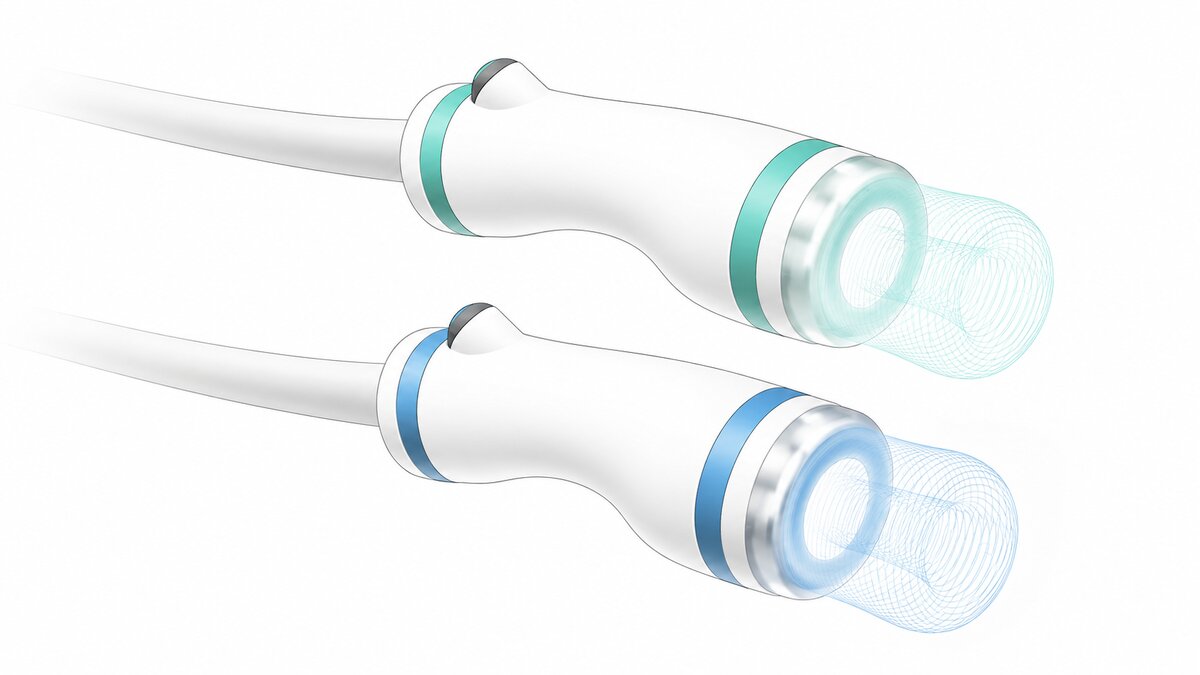
Handpieces do different jobs by depth. A larger deep handpiece, 66 mm across, is used for localized fat over wider areas. A shallower 56 mm handpiece covers cellulite, skin tightening, and smaller fat deposits. The current generation adds a 36.5 mm pocket handpiece for lifting, firming, and the submental area. Device output reaches 200 W, and the manufacturer is Deka, based in Florence.
Worth reading carefully if you are comparing clinics internationally. ONDA carries CE marking in Europe. The Deka platform reached the United States market in April 2026 under FDA 510(k) K260647, granted to El.En. S.p.A. on April 2, 2026 for a device the submission names SPECCHIO, cleared as a modification of the earlier Deka TIAC II and carrying the same 2.45 GHz output, 200 W maximum power, and Deep, Shallow and Pocket handpieces. What that clearance covers is worth knowing precisely: heating for temporary relief of pain and muscle spasm, increased local circulation, and, for the massage function, a temporary reduction in the appearance of cellulite. Fat reduction, body contouring, and skin tightening are not among the cleared indications, which is a distinction most marketing collapses.
Why Microwave Instead of Ultrasound, Radiofrequency, or Freezing?
Each non-invasive body technology puts energy into tissue in a different way, and the differences decide what each one is good at rather than which is best overall.
Cryolipolysis freezes fat to trigger cell death, targets fat rather than skin, and requires the tissue to be drawn into an applicator. Radiofrequency heats tissue through electrical resistance, with depth determined by electrode configuration. High-intensity focused ultrasound concentrates energy at a fixed focal depth. Microwave energy sits apart in that its absorption depends on tissue water content, so the selectivity comes from the tissue rather than from the geometry of the applicator.
Practical consequences follow from that. Treatment is delivered by moving a handpiece over an area rather than by clamping a fixed shape of tissue, which means curved and uneven regions can be covered, and there is no applicator outline. Fat, the fibrous septa responsible for cellulite, and dermal collagen are addressed in the same pass rather than requiring separate devices.
One complication deserves mention because patients ask about it. Paradoxical adipose hyperplasia is a rare reaction in which a treated area enlarges instead of shrinking, and liposuction is the most effective reported correction. A multicenter review of 8,658 cryolipolysis cycles in 2,114 patients documented it in 9 patients, and a 2025 systematic review and meta-analysis covering 28 studies and 13,078 patients put the pooled incidence at 0.22 percent, roughly one patient in 455, higher than the manufacturer’s own reported figure. This is overwhelmingly a cryolipolysis phenomenon. A single case has been reported after non-invasive radiofrequency, and none has been reported after microwave treatment.
At a Glance: Non-Invasive Body Devices
| ONDA (microwave) | Cryolipolysis | HIFU | Radiofrequency | |
|---|---|---|---|---|
| Energy | 2.45 GHz microwave | Cooling | Focused ultrasound | Electrical resistance |
| Depth mechanism | Passes through low-water fat, heat lingers | Fat freezing point | Fixed focal depth | Electrode design |
| Applicator | Handpiece, moved | Suction cup, fixed | Transducer | Electrode |
| Cellulite indication | Yes, for the massage function | No | No | Varies by device |
| Marketed for skin tightening | Yes | No | Yes | Yes |
| Applicator shape constraint | None, handpiece is moved | Fixed by cup | Fixed by transducer | Fixed by electrode |
| Paradoxical adipose hyperplasia | Not reported to date | Documented, 0.22% pooled | Not reported to date | One case report |
What Does the Evidence Actually Show?
Published work on microwave body contouring is genuinely positive and genuinely small. Studies exist across cellulite, localized abdominal fat, and submental laxity, and they report improvement consistently. Sample sizes run from seven to a few dozen, most designs are single-arm rather than controlled, and follow-up rarely extends past a year.
One further caveat belongs here rather than in a footnote. Several of these papers carry co-authors employed by the manufacturer’s parent group, and the consensus document below was convened by the manufacturer. That does not make the findings wrong, and industry involvement is normal in device literature. It does mean the evidence base for this technology has not yet been tested by investigators with nothing at stake, and a patient is entitled to know that before deciding.
A study of submental skin laxity using a 2.45 GHz microwave device treated ten women with moderate to severe laxity across two sessions thirty days apart, ten minutes each. Mean Submental Skin Laxity Grade fell from 3.6 at baseline to 2.3 at twelve weeks after the final session, with no adverse effects reported. Separate work has examined microwave treatment of cellulite, abdominal localized adiposity with nine month follow-up, and localized adiposity in a Latin American population. A manufacturer-convened international advisory board has published consensus recommendations on parameters and patient selection.
None of this makes the effect imaginary. What it does mean is that the honest way to set expectations is with measurement rather than with promises, which is why I measure.
For scale, here is what comparable non-invasive technologies achieve when fat layer thickness is measured by ultrasound rather than estimated by eye. Focused ultrasound on accessory breast fat produced a 17.7 percent reduction over eight weeks. Non-thermal pulsed focused ultrasound on the abdomen produced 16 percent at eight weeks, settling back to 13 percent by twelve. A 1,060 nm diode laser on the flanks produced 7.6 percent at six weeks. Somewhere between about 7 and 18 percent of the treated layer is what this entire category of device delivers when someone measures it, and any single number sitting far above that range deserves a second look.

Why I Brought ONDA Into My Practice
I operate, and most of what I do is surgical. Adding a device to a surgical practice only makes sense if it answers a question surgery answers badly, and for me that question was the patient with a small, well-defined pocket who does not need an operation and should not be talked into one.
Before ONDA, that patient left with nothing. Telling someone with two centimeters of localized fat that liposuction is available is technically true and clinically wrong, because the volume does not justify anesthesia, compression garments, and six weeks of activity restriction. Offering no option at all sends them to a clinic that will simply say yes to everything.
Three things decided the device rather than an alternative. Coverage came first, because a moving handpiece treats a curved flank or an inner thigh in a way a fixed suction cup cannot, and applicator outlines on a treated area are a real problem that patients notice. Second was that the same session addresses fat, the septa that cause dimpling, and dermal collagen, which matters because those three complaints almost always arrive together and treating them with three devices is how a plan becomes an ordeal. Third was that paradoxical adipose hyperplasia, the reaction in which a treated area grows instead of shrinking, is overwhelmingly reported after freezing and has not been reported after microwave treatment. It is rare either way, but correcting it means an operation, and a complication that would land on my own operating list is not an abstraction to me.
Who Responds to ONDA? The Measurements I Use
Candidacy for ONDA is a thickness question, and I settle it with a pinch and, where available, an ultrasound reading.
Treat both of the numbers below as working approximations rather than precise cutoffs. A pinch is a screening tool and an ultrasound reading is a confirmatory one, and where they disagree I go with the ultrasound.
Pinch test. I take a fold between finger and thumb. A fold much thicker than four to five centimeters usually means ONDA alone will not satisfy the patient. A pinch captures two layers of fat plus the skin, so it overstates the true depth, and the fold gives an approximate rather than an exact doubling. Useful heating from the deep handpiece reaches roughly two centimeters. Past that, the bottom of the layer is not being warmed, only the top is reducing, and the proportional change against total volume becomes small enough that the patient sees nothing.
Ultrasound. Where I can measure directly, subcutaneous fat in the region of 10 to 25 millimeters responds best, with confidence highest in the middle of that band and falling off toward the top of it. Above roughly 25 to 30 millimeters I recommend liposuction. Below 10 millimeters there is not enough fat to remove meaningfully, and in that situation I change the goal rather than the patient: the target becomes skin quality and laxity rather than volume.
Note that the two limits fail for opposite reasons. The upper limit is a depth problem, where energy cannot reach the whole layer. By contrast, the lower limit is an absence problem, where the layer itself is not the complaint. Explaining which of the two applies is most of what a useful consultation consists of.

ONDA for the Double Chin and Jawline
Submental treatment uses a smaller handpiece and shorter session times, and it is the application where I am most careful about selection, because the neck punishes both overtreatment and false hope.
Fat under the chin is a small depot with no clothing to conceal it, so a modest absolute change is highly visible, which works in the patient’s favor. What does not work in their favor is skin. Removing or reducing fat beneath skin that has lost its recoil produces a sharper jawline with a looser envelope hanging over it, and no energy device solves that.
So before treating a submental area I run three checks, and any one of them failing sends the conversation toward surgery.
- Snap test. I pinch the neck skin and release it. Skin that does not return within about two seconds has lost the recoil the treatment depends on.
- Platysmal bands at rest. Vertical cords visible in the neck without the patient straining are a muscle problem, and heat applied to fat will not change them.
- Extension test. I ask the patient to raise the chin. A fold that persists on extension is skin, not fat.
Patients who pass all three, with a modest submental fat pad and skin that still springs back, are the group that does best with this device on the face. Patients who fail any of them are told that the honest correction is a neck or deep plane lift, not a course of treatments.

How Many Sessions, and When Do You Stop?
I plan four sessions for a small area with clear borders, and six for a larger or more fibrous region, spaced about four weeks apart. Published protocols sit at or below that. The cellulite study used four sessions, the abdominal series ranged from three to eight, the submental study used two, and the manufacturer’s advisory board recommends three sessions four weeks apart for body contouring. Where I go higher it is because the area is wider, not because more is better.
More important than the starting number is the stopping rule. If the measurements have not moved by the third session, I stop. Continuing to book sessions for a patient who is not responding is not treatment, it is retail, and that patient is better served by the operation that will actually work.
Measurement is what makes that rule possible. I record a tape measurement at a fixed anatomical landmark and a standardized photograph at baseline, before every session, and again at twelve weeks after the final session. Twelve weeks matters because clearance of damaged fat cells is gradual and the endpoint is not visible on the day.

What I tell patients to expect after a completed course on the abdomen is one to three centimeters of circumference, and a reduction in the treated fat layer on the order of 12 to 18 percent. Those are deliberately modest figures, sitting inside the range that published measurements of comparable devices support rather than above it. They are also the figures that survive contact with a tape measure three months later, which is the only kind worth quoting.
When Do I Recommend Surgery Instead?
The crossover is easier to explain in proportions than in device names. If what the patient wants requires reducing more than about a quarter of the local fat volume, ONDA will not get there.
Liposuction removes a substantial share of a defined pocket in a single operation, and the cells it removes are not replaced locally. Adult fat cell number is tightly regulated, with roughly ten percent of adipocytes renewed each year and the total holding constant through adulthood, so what changes after weight gain is the size of the cells that remain rather than the count in the treated area. ONDA reduces something closer to an eighth or a sixth of the layer it treats, across several sessions, with clearance spread over months. Both change the fat cell population in the treated area. Scale and timeline are what separate them, and a patient whose goal sits above that ceiling is better served by an honest referral than by a course of treatments and a disappointment.
Weight is the other half of the conversation, and it applies to both. Whatever is achieved with either approach, regained weight is stored in the areas that were not treated, and the neck shows that change long before the abdomen does.
Surgeon’s Insight
The most useful thing I do in an ONDA consultation is measure in front of the patient. A pinch and a tape take two minutes, and they turn an argument about expectations into a number we can both look at. Patients who are told no by a person holding a tape measure accept it. Patients who are told no as an opinion go and find a yes somewhere else, usually at a clinic that never measured anything. I would rather lose the treatment and keep the patient than book a course I already know will not move.
Is ONDA Safe? Side Effects and Precautions
Treatment is delivered with surface cooling and patients typically describe the sensation as warm rather than painful. Published reports on microwave body contouring have not documented significant adverse effects, though these are small studies and absence of reported harm in ten or thirty patients is a limited kind of reassurance.
Expected effects are transient warmth, mild redness, and occasional tenderness in the treated area for a day or two. Ordinary activity continues immediately, and no compression garment or downtime is required.
Precautions follow from the physics rather than from the brand. Metal implants and electronic implanted devices in the treatment field are contraindications. Pregnancy, active skin infection in the area, and uncontrolled systemic illness are reasons to defer. Patients with a body mass index above 30 are generally not candidates for a contouring device of any kind, because the complaint in that situation is not localized fat.
What This Device Cannot Do
Weight loss is not on the list of what ONDA can do. A device that reduces at most about a sixth of a localized layer is a contouring tool, and a patient who arrives wanting to be smaller overall will not get what they came for. Visceral fat, which sits behind the abdominal wall, is not reachable by any external device.
Significant skin laxity is not on the list either. Some collagen effect is real and worthwhile, but the gap between what heat can tighten and what a lifting procedure can remove is wide, and describing that gap accurately is the difference between a satisfied patient and a disappointed one.
Permanence is a more subtle point. Fat cells damaged by heat are cleared and do not regenerate, so the reduction itself holds. What does not hold automatically is the appearance, because the cells that remain throughout the body can enlarge with weight gain.
The Right Question to Bring to a Consultation
Asking whether ONDA works is asking about a machine. A better question is about you: how thick is the layer I want reduced, and how much of it would have to go before I am satisfied?
Those two numbers decide the answer, and they can be established in the first few minutes of a consultation by anyone willing to measure. A patient with a two centimeter pocket who wants it visibly smaller is in the group this device serves well. A patient with a four centimeter pocket who wants a flat abdomen is not, and no number of sessions changes that.
Choosing a clinic that measures before it recommends, rather than after you have committed to a course, is the most reliable screening test available to you.
Written by Dr. Yongwoo Lee, board-certified Korean plastic surgery specialist in facial anatomy and aesthetic procedures at VIP Plastic Surgery, South Korea.
Frequently Asked Questions
How does ONDA lifting work?
ONDA delivers 2.45 GHz microwave energy through the skin into the subcutaneous fat. Fat absorbs less microwave energy per unit volume than the tissue around it, but it is also transparent to this frequency and clears heat slowly, so warmth accumulates in that layer and damages fat cells over a course of sessions. Damaged cells are cleared in the following weeks. The same heat acts on the fibrous bands that cause cellulite dimpling and stimulates collagen in the skin.
Does ONDA actually reduce fat, or just tighten skin?
Both, in the same session. Fat reduction comes from thermal damage to adipocytes in the deeper layer, and skin effect comes from collagen remodeling in the dermis. Handpieces of different sizes reach different depths, so which one is chosen depends on whether the target is fat, cellulite, or laxity.
How much fat can ONDA remove?
One to three centimeters of abdominal circumference over a completed course, and a reduction in the treated fat layer on the order of 12 to 18 percent. Comparable non-invasive devices measure between about 7 and 18 percent on ultrasound, so any figure far above that range should be questioned.
Am I a candidate for ONDA?
Pinch the area between finger and thumb. A fold up to about four or five centimeters, which corresponds very approximately to a fat layer of two centimeters, is the range that responds. Much thicker than that and the deep handpiece cannot warm the whole layer, which makes liposuction the better recommendation. An ultrasound measurement settles it more reliably than a pinch does.
How many ONDA sessions do I need?
Between four and six, at roughly monthly intervals, with the higher number reserved for wider or denser areas. Ask any clinic you consult what their criterion is for abandoning a course, because a protocol with no exit point is a sales plan.
When will I see results?
Clearance of damaged fat cells is gradual, so the endpoint is assessed at about twelve weeks after the final session. Some change is usually measurable earlier, which is why measuring before each session is useful.
Does ONDA hurt?
Most patients describe a warm sensation rather than pain, since surface cooling protects the skin while the layer underneath is heated. There is no suction and no extreme temperature.
Is there downtime after ONDA?
No. Transient warmth, mild redness, and occasional tenderness for a day or two are expected, and ordinary activity continues immediately. No compression garment is required.
Can ONDA treat a double chin?
Yes, for the right neck. Submental treatment uses a smaller handpiece and shorter sessions. Candidacy depends on skin recoil rather than fat volume, which is why a snap test, a check for platysmal bands at rest, and a chin extension test come before treatment.
ONDA or CoolSculpting, which is better?
They answer different questions. Freezing addresses fat only and requires tissue to be drawn into a fixed applicator. Microwave energy addresses fat, cellulite septa, and skin collagen together and is delivered by a moving handpiece, which suits curved areas. Cryolipolysis also carries a rare risk of paradoxical adipose hyperplasia, pooled at about 0.22 percent, which has not been reported after microwave treatment.
Is ONDA FDA approved?
It carries CE marking in Europe, and the Deka platform holds a United States 510(k) clearance issued in April 2026, K260647, under the submission name SPECCHIO. Read the wording of that clearance rather than the headline, because it authorizes tissue heating, circulation, and, for the massage function, cellulite appearance, and stops short of authorizing fat reduction or body contouring. Regulatory clearance and marketing language are not the same document.
Is ONDA permanent?
Yes and no, and the distinction matters. Cells destroyed by the treatment are gone for good. Your silhouette is not locked in, because every fat cell left elsewhere in your body can still grow, so the result depends on what your weight does afterward.
Can ONDA replace liposuction?
For a small, well-defined pocket, often yes. If the goal requires reducing more than about a quarter of the local fat volume, no. Liposuction removes a substantial share of a pocket in one operation, while ONDA reduces roughly an eighth to a sixth of the layer over several sessions.
Who should not have ONDA?
Patients with metal or electronic implants in the treatment field, those who are pregnant, those with active skin infection in the area, and those with uncontrolled systemic illness. A body mass index above 30 generally indicates that the complaint is not localized fat.
Does ONDA help cellulite?
Cellulite dimpling is caused by fibrous septa tethering the skin to deeper layers, and heat acts on those bands directly. This is one of the areas where microwave energy has a structural rationale rather than only a volume effect.
Will the fat come back after ONDA?
Not the cells that were cleared. Weight gained afterward is stored by enlarging the fat cells that remain, mostly in areas that were not treated, which is the same biology that governs results after liposuction.
This article is for informational purposes only and does not constitute medical advice. Always consult with a qualified medical professional before making any decisions about surgical or non-surgical procedures.