
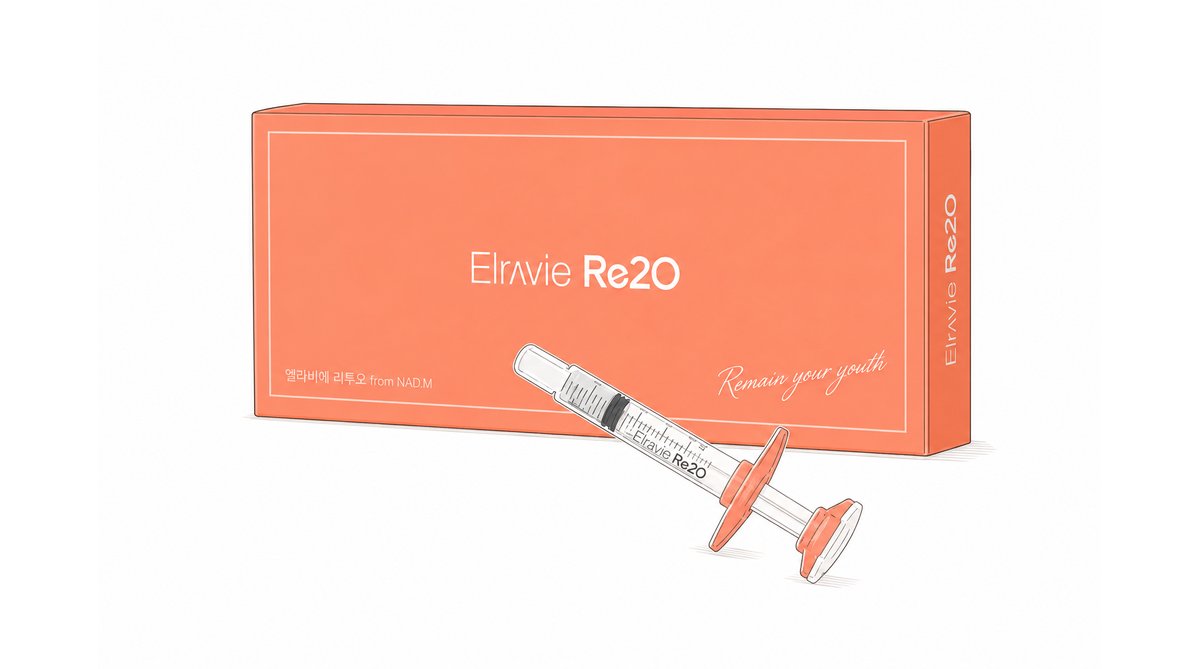
A Skin Booster That Breaks the Pattern
RE2O is the ECM skin booster patients keep asking about, and almost everything written about it gets it slightly wrong, because it is judged against products it has nothing in common with. Every other skin booster runs on the same quiet promise: that your own skin will do the work. Rejuran wakes up your fibroblasts to repair. Juvelook seeds a polymer your body slowly answers with collagen. A hyaluronic acid booster relies on your tissue to hold the water it delivers. In every case, the product is a message, and your skin is the factory that has to read it and act.
RE2O does something different, and that single difference is the whole reason it deserves its own guide. It does not send a message; it delivers the finished material. Instead of asking thinning skin to manufacture more structure, this ECM skin booster places ready-made matrix directly into the dermis, the way you brace a sagging building with steel beams rather than waiting for it to grow its own. If you have read our guide to Rejuran, Juvelook, and Skinvive, you met three camps sorted by mechanism. RE2O is best understood as a fourth, genuinely separate category.
Is RE2O Even a Skin Booster? A Quick Honest Answer
Yes, and the industry classifies it as one, which is why you searched the term. RE2O is marketed and grouped as an ECM skin booster, alongside the polynucleotide and biostimulator families, because it is injected into the dermis to improve skin quality rather than to project a contour like a filler.
There is one honest refinement. A classic skin booster improves skin by prompting it, through hydration, repair signaling, or a collagen trigger. RE2O instead supplies finished matrix outright, which is why some clinicians describe it more precisely as a skin “supplement” within the booster umbrella. The label that helps you find it is skin booster. The word that explains how it behaves is supplement. Hold both, and the rest of this guide makes sense. From here we cover how it works, who it suits, what to expect from results and recovery, and the practical questions on pain, safety, and longevity at the end.
What RE2O Actually Is, and the Numbers Behind It
RE2O, sometimes written Re2O and pronounced “re-two-oh,” is an extracellular matrix skin booster. Its active material is human acellular dermal matrix, or hADM: donated human dermal tissue processed to strip away every cell and fat component while keeping the structural scaffolding intact, then milled into a fine powder and suspended for injection into the dermis. Because that processing removes the cells and DNA, the matrix has no living donor material to reject, and it passes the sterilization and raw-material screening required of human tissue grafts, the same allograft science used in reconstructive surgery for years.
Your dermis is not just cells. The space between them is a dense lattice of collagen, elastin, and water-binding sugars, and that lattice is what gives skin its thickness, firmness, and bounce. ECM is the architecture; the cells are the tenants. As skin ages, the architecture thins, and most boosters try to coax the tenants into rebuilding it. RE2O carries in the architecture itself.
The component breakdown is unusually specific: by published characterization, the matrix preserves an ECM structure of roughly 80 to 89 percent collagen, around 3 percent elastin, and a glycosaminoglycan fraction carrying about 0.4 percent hyaluronic acid, with residual DNA kept very low. You are not receiving one isolated molecule but a miniature copy of real dermal tissue, its components already assembled in roughly the proportions skin uses. The clinical case for this is more than theory. In a randomized, split-face, double-blinded trial of an injectable particulate hADM skin booster, the matrix-treated side showed greater gains in skin density, elasticity, wrinkle depth, pore area, and hydration than the hyaluronic-acid control. Separately, laboratory work has shown micronized acellular dermal matrix acting as a scaffold for collagen synthesis as the body’s own cells move in. Read those results as what the matrix is designed to do, with the understanding that individual results vary by skin condition, area, and technique.

Build vs. Fill: How RE2O Differs From Every Other Skin Booster
Hold two pictures side by side. A biostimulator such as Juvelook is a build strategy: it places a polymer your skin treats as a mild irritant, and over weeks to months your fibroblasts lay down fresh collagen around it. The collagen is yours, made on demand, and slow to arrive.
RE2O is a fill strategy. It places actual dermal matrix, so the structural reinforcement is present the moment the product is in. There is no waiting for your cells to manufacture a scaffold, because the scaffold is what was injected. Your fibroblasts then move onto that matrix and add their own collagen and elastin over the following weeks, the slower second phase. A biostimulator gives your skin a reason to build; RE2O gives your skin something to build on. For a dermis too thinned to respond well to mere signaling, having the raw material handed over directly can matter more than another nudge to perform.
RE2O vs. Rejuran, Juvelook, and Skinvive at a Glance
| RE2O (ECM) | Other skin boosters: Rejuran (PDRN), Juvelook (PDLLA), Skinvive (HA) | |
|---|---|---|
| Core strategy | Fill: delivers ready-made dermal matrix | Signal or build: prompt your skin to do the work itself |
| What goes in | Human acellular dermal matrix (collagen, elastin, GAG) | A PDRN repair signal, a PDLLA collagen trigger, or HA for water |
| Day-one effect | Immediate structural top-up | Mostly minimal; only HA shows glow, over 1 to 2 weeks |
| Best for | Thin, fragile, depleted skin: under-eye, perioral, neck | Each fixes one deficit: damage, laxity, or dryness |
| Instant glow? | No: density and structure, not shine | Varies by product |
| Course | About 3 sessions, cumulative | Typically 1 to 3 sessions, a few weeks apart |
Where the RE2O Skin Booster Earns Its Place: Thin, Mobile Skin
The fill strategy outshines everything else on skin that is thin, fragile, and in constant motion, exactly where ordinary boosters and fillers disappoint.
Under the eye. The thinnest skin on the body, moving with every blink, punishes the wrong product. HA filler in thin under-eye skin that is not truly hollow tends to puff, hold water, and throw a bluish Tyndall shadow, while a regeneration booster adds little structure. RE2O reinforces the dermal density of thin lid skin directly, rather than filling a pocket or merely signaling repair. If your question is whether the problem is thin skin or a genuine hollow, our guide to lower blepharoplasty versus tear trough fillers draws that line.
Around the mouth and on the neck. The perioral area creases all day, and fine lip lines sit on thin skin that volume alone cannot fix; reinforcing the matrix addresses the thinness behind the lines. Crepey neck skin and the gaping pores of thin, lax faces both trace back to weakened dermal support, which rebuilding matrix density underneath can firm and refine. The common thread is structural thinness in delicate areas: when the problem is “there is not enough skin here, and what is here is fragile,” a product that hands over matrix directly has the advantage.
Signs RE2O Might Be a Good Fit
You may be a candidate for the RE2O skin booster if you recognize yourself in these patterns:
- Fine lines and a loss of firmness are starting to make you look older than you feel.
- Your skin has lost overall density, and no single cause (not just dryness, not just laxity) explains why it looks thinner and more fragile.
- Enlarged pores and a rough, papery texture sit on skin that has thinned and lost its underlying support.
- Thin, delicate skin in high-movement areas such as the under-eye, around the mouth, or the neck has not responded well to filler or ordinary boosters.
- You want a longer-term, structural skin-booster result that rebuilds dermal density, rather than a quick surface glow.
If several of these sound familiar, the detailed profiles below will help you place yourself more precisely.
Which Skin Booster Is Right for You: Three RE2O Patient Profiles
Carry the closest match into consultation as a working hypothesis, not a self-prescription.
1. Your under-eye skin is thin and crepey, but not hollow
You see fine crinkling and a fragile, tired quality, yet the area is not sunken. Filler is the wrong instinct, since there is no hollow to fill and thin-skin filler risks puffiness and a bluish tint. RE2O reinforces the dermal matrix so the lid skin reads thicker and more resilient rather than inflated. Expect a density change, not instant plumping.
2. Your skin has lost overall density and nothing single explains it
Not purely dry, not purely lax, not post-acne, the whole face simply looks thinner and less resilient, and single-deficit boosters have not hit the mark. This diffuse loss of dermal density is the ECM camp’s home ground, because RE2O replenishes the matrix as a unit rather than topping up one component. Expect a gradual, accumulating change over a short package.
3. You want structure in a mobile area where filler has failed you
You have thinning in a zone that moves constantly, and past filler felt unnatural, migrated, or puffed. RE2O reinforces matrix density rather than sitting as a soft bolus that shifts with movement. For how HA filler misbehaves when it migrates, our guide to lip filler migration and duck lips explains the exact failure mode RE2O is often chosen to avoid.
Surgeon’s Insight: Stop Asking Your Skin to Do What It No Longer Can
Every booster in the other three camps assumes your skin still has the capacity to respond. A signal only works if there is a factory left to receive it. In young skin that is merely dry or tired, that holds, and a stimulator is the elegant, low-effort answer.
But thinning, fragile skin, often the under-eye, perioral area, and aging neck, can reach a point where the factory itself has run down. Send it another message and you get a weak reply, which is why some patients feel boosters “stopped working.” RE2O exists for that case: by delivering matrix directly, it supplies the material outright instead of relying on a tired response. The judgment is not whether RE2O beats Rejuran or Juvelook in the abstract, but whether the skin in front of me can still build, or needs to be handed what it can no longer make.
Two Myths to Drop Before You Book RE2O
Myth one: RE2O is a glow shot. It is not. If you picture the wet sheen of an HA microdroplet treatment, you will misjudge the result. RE2O is a structure-and-density treatment, and because it reinforces the dermis rather than flooding it with hydration, the first week can bring temporary dryness or fine flaking. The payoff is firmer, denser skin over the following weeks, not an immediate dewy finish. Choosing RE2O for instant radiance is the same error as choosing a biostimulator for simple dehydration.
Myth two: RE2O carries the nodule risk people fear from biostimulators. The lumps that gave polymer biostimulators their reputation were largely inflammatory nodules, and rarely granulomas, driven by the polymer provoking a strong tissue reaction. RE2O is different mechanically: as a matrix delivered into the dermis, its common early reaction is the transient raised bumps any superficial dermal injection produces, the so-called embossing, which flattens over days as the material distributes. That is a placement artifact, not inflammatory clumping. No injection is risk-free, but the specific fear carried over from biostimulator horror stories is largely misplaced for an ECM product.
How a RE2O Course Runs, and When You See It
RE2O is usually a short package, commonly around three sessions, with benefit accumulating across the series rather than peaking after one visit. Because the first phase is an immediate matrix top-up and the second is your own tissue building onto it, you may notice an early change in skin feel, then a slower firming over subsequent weeks.
Most clinics numb the area with a topical cream first, so discomfort during the injections is generally mild and short-lived. Your clinician may use a sharp needle or a blunt cannula depending on the area and the goal, a choice that also shapes how much bruising and downtime you can expect (more on that in the FAQ below). Downtime is modest: possible bruising, brief swelling, redness, mild tenderness, and the temporary embossing bumps, most settling within two to three days. Light cleansing is fine a few hours later, makeup usually the next day, with the standard week off saunas, hot baths, vigorous exercise, and alcohol. Plan any treatment a week or two ahead of an important event, never the day before. Postpone RE2O during an active skin infection or cold-sore outbreak in the area, an autoimmune flare, or pregnancy and breastfeeding. Tell your clinician if you scar or pigment easily, since it changes the plan. RE2O also sequences sensibly with other treatments. For instance, a heat-based device such as an ultrasound lift can come first, then RE2O about a week later, so activated fibroblasts receive fresh matrix when they are most active. How and whether to combine treatments is a decision for in-person assessment, not a fixed recipe.
What RE2O Cannot Do
RE2O improves dermal density and quality. It does not lift tissue that has genuinely descended, so jowling or heavy sagging belongs to threads, energy devices, or surgery. It is not a primary volumizer either; a flat cheek or truly sunken tear trough that needs projection is a job for a dedicated filler, not a matrix spread through thin skin. It will not relax dynamic wrinkles, which remain the domain of botulinum toxin. And it cannot outpace ongoing sun damage, so daily sunscreen is the floor beneath any result. For choosing a procedure by anatomy rather than trend, our guide to sub-brow lift versus upper blepharoplasty applies the same source-first logic to eyelid surgery.
The Bottom Line on the RE2O Skin Booster
RE2O is not a better Rejuran or a faster Juvelook, and treating it as a rival on the same ladder is how patients end up disappointed. Where the familiar boosters send your skin a message and wait for a reply, RE2O delivers the structural material outright, which is why it shines on thin, fragile, mobile skin that no longer responds well to mere signaling. Go in expecting density and structure rather than instant glow, know that the biostimulator nodule story does not transfer to an ECM matrix, and the product does precisely what it was built to do. If your reflection matched one of the profiles above, you now hold a working hypothesis to bring to consultation rather than a brand name borrowed from a feed.
Written by Dr. Yongwoo Lee, board-certified Korean plastic surgery specialist in facial anatomy and aesthetic procedures at VIP Plastic Surgery, South Korea.
Frequently Asked Questions About the RE2O Skin Booster
What is RE2O (Re2O)?
RE2O is an ECM skin booster whose active material is human acellular dermal matrix (hADM): donated human dermal tissue processed to remove all cells and fat while keeping its structural scaffold, then milled into a fine powder for injection. Rather than stimulating your skin to build collagen, it delivers ready-made extracellular matrix, collagen, elastin, and water-binding sugars, directly into the dermis to reinforce thinned, fragile skin.
Is RE2O a filler or a skin booster?
It sits in between, which is why some clinics call it a skin supplement. Like a booster, it spreads through the dermis to improve skin quality rather than projecting a contour. But unlike a stimulator, it delivers actual extracellular matrix rather than signaling your skin to make its own, so it reinforces structure directly. It is not a volumizing filler for deep hollows.
RE2O vs Rejuran: which is better?
Neither is universally better; they work in opposite directions. Rejuran uses salmon-derived polynucleotides to wake up your fibroblasts so your skin repairs itself, which suits skin that can still respond. RE2O delivers ready-made human dermal matrix directly, which suits thin, fragile skin where the matrix itself has run down. If your skin is inflamed or post-acne, lean Rejuran. If it is thinned out and structurally deficient, RE2O has a real case.
RE2O vs Juvelook: what is the difference?
Juvelook is a biostimulator that places a PDLLA polymer to trigger your own collagen over months, a build strategy. RE2O is a fill strategy that supplies finished dermal matrix immediately, then lets your tissue add to it. Juvelook leans toward laxity and lost bounce; RE2O leans toward thin, depleted skin in delicate areas like the under-eye.
Will RE2O give me an instant glow?
No, and expecting one is the most common reason patients feel let down. RE2O is a density and structure treatment, and the first week can even bring temporary dryness or light flaking. The reward is firmer, denser, better-textured skin over the following weeks, not an immediate dewy sheen. If instant radiance is your goal, an HA microdroplet product is the better match.
Does RE2O cause the nodules people worry about with biostimulators?
The lumps that gave polymer biostimulators their reputation were mostly inflammatory nodules driven by a strong tissue reaction. RE2O works differently as a delivered matrix, and its common early bumps are the transient embossing any superficial dermal injection produces, which flattens within days. No injection is risk-free, but the specific inflammatory-nodule fear does not map cleanly onto an ECM product.
Is RE2O done with a needle or a cannula?
Both, and neither is universally better; the right choice depends on the goal, the area, and the operator. A sharp needle places the matrix precisely and shallowly, which suits texture, fine lines, and pores, but means more injection points and bruising. A blunt cannula enters through one point and fans out, with less bruising and gentler placement, suiting deeper or broader work. What matters most is that your injector controls depth well, since the result depends on the matrix landing in the right layer.
Is RE2O safe during pregnancy or breastfeeding?
Standard practice is to wait. Injectable skin treatments are not studied for safety in pregnancy or breastfeeding, so clinicians routinely postpone elective cosmetic injections until afterward. Use that window for sun protection and a good topical routine, and revisit RE2O later.
How many sessions of RE2O will I need?
Most plans run as a short course of around three sessions a few weeks apart, and the benefit accumulates across the course rather than peaking after a single visit. Exact count depends on the area treated and your starting condition: diffuse thinning across the whole face usually calls for the full course, while one small area sometimes needs fewer sessions. Your clinician sets the number after assessing your skin thickness and density directly, not from a one-size protocol. What makes the planning different from other skin boosters is that the active material is processed human dermal matrix rather than a synthetic or single-molecule product, so the course is built around how much structural matrix your skin needs, and the specifics are confirmed at consultation.
How long does RE2O last?
It is a structural reinforcement that builds across a short course, typically around three sessions, with your own collagen and elastin forming on the delivered matrix over the following weeks. Because the injected matrix is gradually remodeled into your own tissue, longevity is not a fixed expiry date, but most patients can expect the improvement to hold on the order of a year, with individual results varying by skin condition, area, and aftercare. It is best maintained with periodic top-up sessions rather than treated as permanent, and a consultation will set a realistic interval for your skin.
This article is for informational purposes only and does not constitute medical advice. Always consult with a qualified medical professional before making any decisions about surgical or non-surgical procedures.