
How Do You Choose a Plastic Surgeon in Korea and Know Who Will Operate?
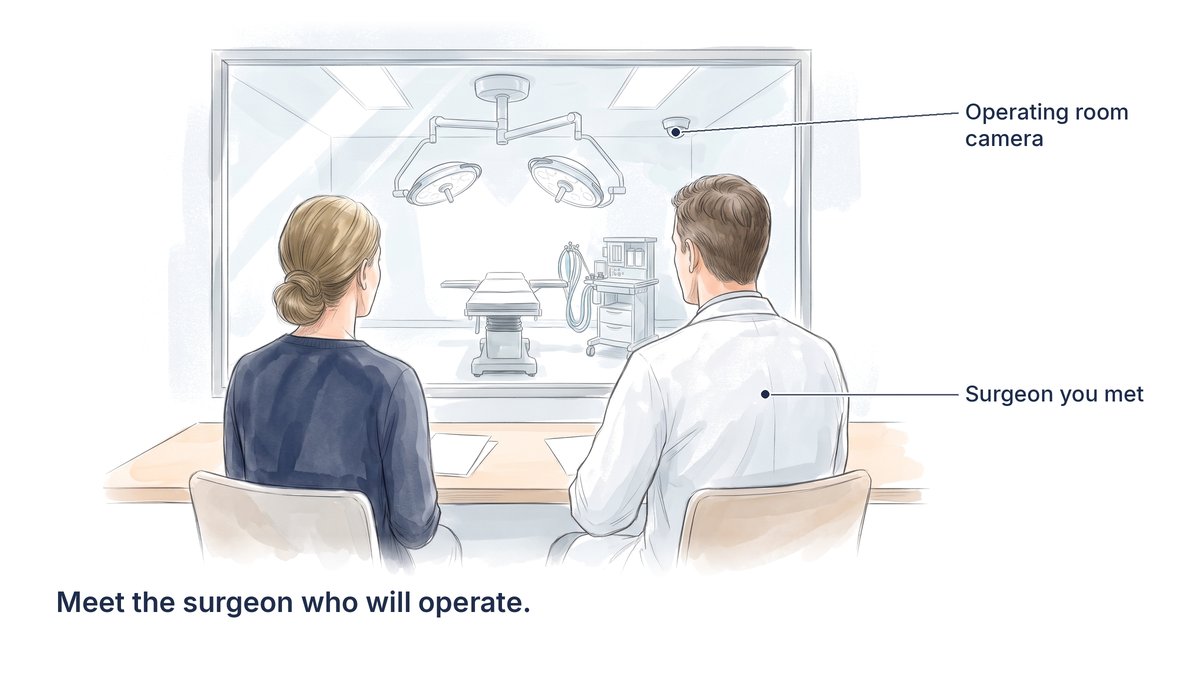
Choosing a plastic surgeon in Korea comes down to one check: the surgeon who examines you in consultation should be the surgeon who operates on you. You can confirm it in three concrete ways: get that surgeon’s name in writing, ask who will give the anesthesia and watch the monitor, and ask in writing for your operation to be recorded, which Korean law has let patients do since September 2023. A famous name matters less than making sure the name you met is the one at the table.
The worry is not invented. Korea’s plastic surgery society estimated that about 100,000 patients were victims of ghost surgery between 2008 and 2014, an estimate rather than a count, and the health ministry counted about 100 prosecuted cases in the five years before 2018, a figure reported in 2022. Those numbers changed the law, and the new law gives foreign patients tools most of them do not know exist.
The stakes are large: in 2025 the health ministry counted 2,011,822 foreign patients from 201 countries, with plastic surgery accounting for 11.2 percent, about 233,000 people.
What Is Ghost Surgery, and Is Every Assistant in the Operating Room a Ghost?
Ghost surgery is an undisclosed substitution: another doctor, or someone who is not a doctor at all, operates in place of the surgeon you agreed to, without your consent. An assistant who helps under the named surgeon’s direction is not a ghost surgeon; a stranger who takes over once you are asleep is.
An editorial in the Korean plastic surgery society’s own journal defined it as “one surgeon replacing another without the patient’s consent”, described cases in which the promised doctor was not even in the operating room, and argued that a substitution should be treated as assault and fraud, because the right to operate comes from the patient’s consent. A 2018 legal review found that at the time no provision of the Medical Service Act punished ghost surgery as such, although charges of bodily harm, fraud and falsified records could apply, and that the surgeon who received the consent carries responsibility for the whole operation.
One case changed public opinion. A college student, Kwon Dae-hee, had jawline surgery in 2016, lost more than 3.5 liters of blood and died after 49 days in a coma. Footage showed parts of his operation done by an unsupervised nursing assistant, and in 2021 the surgeon was convicted of involuntary manslaughter.
Teaching hospitals are a gray zone: a 2025 ethics review noted that resident and fellow participation can be mistaken for ghost surgery, and that standardized training guidelines are still missing. A private cosmetic clinic is not a training hospital, so the questions there are simpler: who makes the incision, who performs the critical steps, and who closes?
How Does Korea’s Operating Room CCTV Law Work for a Foreign Patient?
Since September 25, 2023, every Korean clinic or hospital that operates on patients under general anesthesia or planned IV sedation (“sleep anesthesia”) deep enough that they cannot perceive or remember must have a camera in the operating room, and must record your operation if you or your guardian request it in writing. A clinic may not record on its own initiative, so the request has to come from you.

The provision, Article 38-2 of the Medical Service Act, passed in August 2021 after six years of stalling, with a two-year grace period. Its working rules, as reported the day it took effect and in the medical press, come down to five points:
- What is filmed. The whole room in high definition, the patient and every participating staff member visible, from the start of anesthesia until the patient leaves the operating room. No audio unless the patient and every team member agree. Rooms used only for local-anesthesia procedures are excluded.
- How you ask. By a written request form, which the clinic must make available and tell you about.
- How long it is kept. At least 30 days, not deleted while a request is pending, and extendable 30 days at a time.
- Who can see it. Investigators and courts; the Korea Medical Dispute Mediation and Arbitration Agency during a mediation; or the patient, when every participating staff member also consents.
- When a clinic may refuse. Emergency surgery, high-risk surgery needing active life-saving measures, serious harm to resident training at a training hospital, and similar cases, with the reason explained beforehand and logged.
Few patients use it. Between September 2023 and August 2025, 123,762 recording requests covered about 4 percent of the 3.1 million operations performed on unconscious or sedated patients, while 99.8 percent of obligated institutions had cameras. Two rules follow: ask in writing before the day of surgery, and if anything goes wrong, request an extension within 30 days so the footage still exists.
Do not hide a phone instead. In June 2026 Korea’s Supreme Court upheld the convictions of a patient who secretly audio-recorded his own operation and of the lawyer who posted it, ruling that recording without the consent of all participating staff remains illegal.
A camera is a record, not a quality mark. A physician editorial noted that no other country enforces operating room cameras by law, and a 2023 legal analysis called it too early to judge the effect on ghost surgery, while expecting it to be net beneficial because it protects a patient’s postsurgical right to know who did what to them while they were unconscious.
How Can You Tell a Plastic Surgery Specialist From Any Licensed Doctor in Korea?
Any licensed doctor in Korea may legally perform cosmetic surgery, so the word “surgeon” on a website proves little. The quickest public check is the clinic’s registered name: only a clinic founded by a board-certified plastic surgery specialist (성형외과 전문의) may put the specialty in its name, as in “OO성형외과의원” (OO Plastic Surgery Clinic).

Reporting on Korea’s cosmetic industry confirmed that any licensed doctor can legally perform it, and described a Hong Kong patient who died during liposuction in 2020 after being introduced to the clinic through an illegal broker; the operating doctor was not a plastic surgery specialist. A plastic surgery specialist in Korea has completed four years of residency in the specialty and passed its board examination, and only that doctor may use the title, so ask which specialist certificate the operating surgeon holds.
The signboard rule can be checked from the street or a map app. A clinic whose founder is not a specialist must use the form “OO의원” (a proper name plus “clinic”); it may list departments, but that department text must be no more than half the size of the proper name. So “성형외과의원” inside the name means the founder is a plastic surgery specialist, and “의원” with a small “진료과목: 성형외과” (departments: plastic surgery) does not. The sign describes the founder, not every doctor inside.
There is no need to settle: specialists in private clinics rose from 1,003 in 2012 to 1,769 in 2022.
Do ISAPS and ASPS memberships tell you anything?
They tell you about training and peer vouching; neither is a license or a guarantee. ISAPS Active membership requires more than three years in practice, national society certification, a member’s recommendation and proof of aesthetic training. ASPS International Membership is for plastic surgeons outside the United States and Canada who have completed training, with a national society letter of good standing or an ASPS member’s sponsorship. I am an ISAPS Active member and an ASPS International Member. In Korea the credential that matters legally is still the health ministry’s specialist certificate; check any membership claim in the society’s own directory.
Who Gives the Anesthesia, and Who Watches Your Breathing?
Ask by name who will put you to sleep or sedate you and who will watch the monitor, because Korean law does not require sedation to be given by an anesthesiologist and few cosmetic clinics employ one. As of July 2026, 69 of 1,231 plastic surgery clinics, 5.6 percent, had an anesthesiologist on staff, and the National Forensic Service linked 50 deaths to cosmetic procedures between 2016 and 2024, 23 of them related to anesthesia, the largest single category. Some clinics bring in a freelance anesthesiologist who moves between clinics and may not appear in staff counts, which is one more reason to ask for a name.

Sedation given by a surgeon is not automatically unsafe, and I give it myself for eyelid surgery. What matters is a clear answer before you arrive: which drugs, which monitors, who watches them while the surgeon operates, and what happens if your breathing slows. The trade-offs for a facelift are set out in facelift anesthesia, general versus sedation.
What Do Clinic Registration, Agencies, and Commissions Mean for You?
A Korean clinic that recruits foreign patients, by advertising to them abroad or by working with an agency, must be registered for that purpose, and an agency that brings you there must be registered too; anyone else paid to steer patients is an illegal broker. Registration is a legal floor you can check, not a quality award.
Under Article 6 of the Act on Support for Overseas Expansion of the Medical System and Attraction of Foreign Patients, a registering clinic must have at least one board-certified specialist in each department for which it recruits foreign patients, and must hold malpractice liability insurance or belong to the medical liability mutual-aid association. Registration lasts three years. Agencies must register with the provincial government, post a surety bond and keep an office in Korea.
Paying for referrals is otherwise banned; foreign patients are an exception only between registered clinics and registered agencies, and the health ministry caps the commission a clinic may pay a registered agency at 30 percent of the medical fee. An agency may book, inform, arrange travel and interpret; it does not diagnose you or choose your operation. An unregistered broker has no cap and no accountability, and reports of illegal solicitation to the Korea Health Industry Development Institute rose from 11 in 2021 to 59 in 2023.
Above that floor sits a voluntary accreditation, KAHF, whose roughly 150 items cover dispute prevention, patient safety and infection control. Few clinics hold it: 24 institutions were certified in 2025, the most in a single year so far. A clinic without KAHF is no cause for concern; a clinic marketing to you abroad that cannot say whether it is registered is a reason to ask more. The Korea Health Industry Development Institute’s patient support pages explain how to report a broker and where to get help in a dispute.
What Should You Check Before You Book? At a Glance
Eight checks cover most of the risk, and every one can be done before you buy a plane ticket.
| What to check | How to check it | A reassuring answer | A reason to pause |
|---|---|---|---|
| Who operates | Ask in consultation; get the name in writing | The surgeon you met, who sees you again before anesthesia | “One of our doctors”; surgeon assigned later |
| Specialist status | Clinic’s registered name; ask the surgeon | 성형외과의원 in the name and a 성형외과 전문의 operating | No specialty named, or the question is avoided |
| Anesthesia | Ask who gives it and who watches the monitor | A named person, named drugs, named monitors | No clear answer |
| Foreign-patient registration | Ask a clinic that markets to you abroad | Registered, and able to say so plainly | Unsure, or not registered |
| Agency | Ask the agency for its registration | Registered agency, or you book directly | Registration not shown; pressure to pay |
| Operating room video | Ask for the request form before the day | Form offered and explained | Discouraged, or called unavailable |
| Consent | Read it before the day of surgery | Explained by the surgeon, in a language you read | First seen on the morning of surgery |
| Aftercare | Ask for the follow-up schedule | A date for each visit and a direct contact after you fly home | Length of stay never discussed |
How Does Dr. Yongwoo Lee Answer These Checks at VIP Plastic Surgery?
At VIP Plastic Surgery in Jeju, I see my own patients in consultation and I perform my own operations, and the practice is entirely cosmetic. I also say plainly what I do not do: I do not perform breast surgery or two-jaw (orthognathic) surgery.
The clinic is registered under Korea’s foreign-patient law as an institution that receives international patients. Our operating rooms have cameras, and an operation is recorded when the patient requests it. I would rather a patient ask for the recording than lie awake wondering who was in the room.
We do not work with agencies. International patients contact the clinic directly, and when I am your surgeon, the diagnosis and the surgical plan come from me.
Facelifts and other large operations are done under general anesthesia given by a board-certified anesthesiologist, with capnography, BIS monitoring of anesthetic depth and active warming. Patients stay one night after these operations, international patients lodge inside the hospital building with nurses on duty, and transfer to Jeju National University Hospital or Halla Hospital is arranged in advance.
Eyelid surgery is done under intravenous sedation that I give myself, with local anesthesia: midazolam and ketamine for the upper eyelids, propofol and ketamine for the lower eyelids. A dedicated nurse watches the monitors for blood pressure, oxygen saturation and heart rate continuously while I operate, an airway and oxygen are used to hold saturation at 95 percent or above, and I intubate if it is ever needed.
These are the answers I give; ask every clinic you consider the same questions, including mine.
Which Patient Are You?
Each of these six situations points to a different first question.
1. You found the clinic through an agency. Ask the agency for its registration, ask the clinic whether it is registered for foreign patients, and speak with the operating surgeon before you pay anything.
2. You were offered a discount, a package, or a deadline. A price that expires tonight is a sales technique, not a medical decision. Reporting has described patients offered discounts in exchange for positive reviews, and patient testimonials in Korean medical advertising are prohibited.
3. You are coming for a revision. Bring your previous operative notes, and expect the surgeon to explain the cause of the problem before offering the fix, as in double eyelid revision and the sausage eye.
4. You are having a large operation under general anesthesia. Ask for the anesthesiologist’s name, the recording form, where you will spend the first night, and who reviews your health history and medications before anesthesia (see what to stop before plastic surgery, and never stop a prescribed blood thinner or diabetes drug without the doctor who prescribed it).
5. You chose a surgeon from photographs on social media. Photographs show an outcome, never who held the instruments. Ask whether that surgeon will operate on you, and what target they would set for your face, the argument made in what natural actually means in plastic surgery.
6. You have seen several clinics and none has felt right. Sometimes the fit was wrong. Sometimes the worry is larger than the feature, and a careful surgeon will say so, as described in body dysmorphic disorder and plastic surgery screening.
What Follow-Up Should a Korean Clinic Promise Before You Book?
Before you book, the clinic should tell you how many days you need to stay, which appointments only the surgeon can perform, who will examine you after surgery, and how you will reach that person from home.
The operation sets the length of stay, not your vacation: about a week for incisional eyelid surgery and ten to fourteen days for a facelift, with the visit-by-visit reasons in how long to stay in Korea after plastic surgery. Ask who sees you at each visit.
Leave with a short operative summary in English, the visit dates, photographs from the last visit and a direct clinic contact; a doctor at home needs that bundle, and any later complaint rests on it.
Surgeon’s Insight: The Name on the Plan Should Be the Name at the Table
When patients compare clinics, they expect the conversation to be about technique. I would rather start with names, including the one most people forget to ask for: who will you call on day five? A surgeon who can name each person in your care has told you most of what you need to know about how the operation will be run.
I taught plastic surgery at a university hospital before I moved into private practice, and the habit I kept is that every step of a patient’s care has someone’s name on it. A patient who asks for names at every step is not being difficult.
What Are the Red Flags in a Korean Plastic Surgery Consultation?
Never meeting the operating surgeon, or meeting one who cannot say who will perform each part of your operation, is the clearest red flag. Every “reason to pause” in the checklist table counts too: nobody named for the anesthesia, a recording request discouraged or refused without a reason the law accepts, an agency that hides its registration, a consent form first seen on the morning of surgery. Four more show up in the consultation itself:
- The surgeon is a name on a website. A coordinator can arrange your stay; the diagnosis and the plan should come from the person who will operate.
- Pressure to book or pay the same day, a discount that ends tonight, an offer that depends on a review, or reviews that read like advertising.
- A promised tax refund on cosmetic surgery, which ended at the close of 2025.
- A surgeon who never says no. A refusal is evidence of assessment, as with a facelift refused to a patient who cannot stop smoking. For injectables, ask who manages a complication (filler blindness warning signs).
Does Korea Still Refund VAT on Cosmetic Surgery for Foreign Tourists?
No. The special refund of the 10 percent value-added tax on foreign tourists’ cosmetic procedures, introduced in April 2016, was not extended and ended on December 31, 2025. As of November 12, 2026, it is not available.
Bills to restore it have been introduced, most recently in August 2026 to run it through 2029, but none had passed when this was written.
What Can You Do if Plastic Surgery in Korea Goes Wrong?
If you have trouble breathing, chest pain, a rapidly growing swelling on one side of the face or neck, or any change in vision, call emergency services or go to the nearest emergency department first, and contact the clinic afterward. For everything else, start with your operating surgeon, because most problems are medical before they are legal. Beyond that, Korea’s Medical Dispute Mediation and Arbitration Agency (K-medi), a public body, runs a website in Korean, English and Chinese, offers free consultation, and accepts applications online, by mail or by email.

Mediation begins only if the clinic agrees, except that it starts automatically for death, unconsciousness of a month or more, or severe disability. Experts appraise the case within 60 days, and the agency decides within 90 days, extendable once by 30. A decision both sides accept has the effect of a judicial settlement. Claims must be made within three years of learning of the harm and who caused it, and within ten years of the event. When the agency opened in 2012, it provided for a panel member with knowledge of foreign law in foreign-patient cases.
Few foreign patients use it: 37 foreign-patient applications in 2024, a year in which Korea counted 1,170,467 foreign patients. One reason is time, since a stay on the C-3-3 medical tourism visa cannot exceed three months, so a patient may have to return to Korea for the proceedings. Keep the consent form, the operative summary, prescriptions and dated photographs, and if the operating room footage matters, request its extension at once.
What Is the One Question to Ask Before Choosing a Plastic Surgeon in Korea?
Ask one question before you choose a plastic surgeon in Korea: who, by name, will operate on me, who will give my anesthesia, and will I meet both before I am asleep? A clinic that answers with names, offers the recording form and explains the follow-up visits has passed most of the checks in this guide. An answer that offers an unnamed team, a package or a deadline in place of names tells you something too.
Written by Dr. Yongwoo Lee, board-certified Korean plastic surgery specialist in facial anatomy and aesthetic procedures at VIP Plastic Surgery, South Korea.
Frequently Asked Questions About Choosing a Plastic Surgeon in Korea
What is ghost surgery in Korea?
Ghost surgery, also called proxy surgery, is an undisclosed substitution for the surgeon you agreed to. A 2018 legal review found no provision of the Medical Service Act punishing it as such, but charges of bodily harm, fraud and falsified records can apply, and the surgeon who took your consent is responsible for the whole operation.
Has the CCTV law stopped ghost surgery in Korea?
Nobody can yet say how much it has reduced it; legal analysts called it too early to measure in 2023. It protects only patients who use it: between September 2023 and August 2025, recording was requested for about 4 percent of eligible operations.
Can I ask for my plastic surgery to be recorded in Korea?
Yes. You or your guardian submit a written request form before surgery, and the clinic records from the start of anesthesia until you leave the operating room. Operations under general anesthesia or IV sedation are covered; procedures done only under local anesthesia, with you fully awake, are not.
Can I watch the operating room video afterward, and how long is it kept?
Not freely. Investigators, courts and the Korea Medical Dispute Mediation and Arbitration Agency can access it, and the patient can when every participating staff member consents. Footage is kept at least 30 days and can be extended 30 days at a time on request.
How do I check if a Korean doctor is a board-certified plastic surgeon?
Ask whether the operating surgeon is a 성형외과 전문의 (plastic surgery specialist) and ask to see the certificate. A clinic name containing “성형외과의원” tells you only that the founder is one.
What is the difference between a plastic surgeon and a cosmetic surgeon in Korea?
A plastic surgery specialist completed a four-year plastic surgery residency and passed the specialist board. Any licensed doctor may legally perform cosmetic surgery but cannot use the specialist title without that training.
Are medical tourism agencies in Korea legal?
Registered agencies are legal; unregistered brokers are not. A registered agency may be paid a commission only by a registered clinic, capped by the health ministry at 30 percent of the medical fee, and it may book, interpret and arrange travel but not diagnose you or choose your operation.
Does a Korean clinic have to be registered to recruit foreign patients?
Yes. A clinic that advertises to foreign patients or works with an agency must register, keep at least one board-certified specialist in each department for which it recruits foreign patients, and hold malpractice liability insurance or mutual-aid membership. KAHF accreditation is a separate, voluntary and much rarer standard.
Who gives anesthesia at Korean plastic surgery clinics?
It varies, and the law does not require sedation to be given by an anesthesiologist. As of July 2026, 5.6 percent of plastic surgery clinics had one on staff. Ask who gives your anesthesia and who watches the monitors while the surgeon operates.
Is plastic surgery in Korea safe for foreigners?
Safety depends on the clinic more than the country. About 2 million foreign patients came to Korea in 2025, 11.2 percent for plastic surgery, while the National Forensic Service linked 50 deaths to cosmetic procedures between 2016 and 2024, 23 of them related to anesthesia. Confirm the operating surgeon’s specialist certificate, who gives the anesthesia, and the clinic’s foreign-patient registration before you book.
What can a foreign patient do if something goes wrong after surgery in Korea?
Get emergency care first for anything urgent, then contact the operating surgeon. For a dispute, the Korea Medical Dispute Mediation and Arbitration Agency offers free consultation with an English website; mediation usually needs the clinic’s agreement, a decision is due within 90 days, and a claim must be made within three years of learning of the harm.
Do ISAPS or ASPS memberships mean a Korean surgeon is good?
They show a surgeon met the society’s training requirements and was vouched for, which is useful, but they are not licenses or guarantees. Confirm any claim in the society’s own directory, and confirm the Korean specialist certificate.
Will I meet my surgeon before the operation in Korea?
You should insist on it. Get the operating surgeon’s name in writing, ask whether that surgeon will see you on the day before anesthesia, and meet the surgeon before you pay.
This article is for informational purposes only and does not constitute medical advice. Always consult with a qualified medical professional before making any decisions about surgical or non-surgical procedures.
